Lactose intolerance comes up in our conversations more than you might expect, especially at markets, in our DMs, usually from customers who love the idea of yogurt but have been cautious about dairy for years. It’s a fair concern, and it deserves a real look.
The good news is that yogurt and milk are not the same thing when it comes to lactose. Here’s how.
Why Yogurt Is Lower in Lactose Than Milk
Yogurt begins as milk, but it undergoes something milk doesn’t: fermentation.
During fermentation, live bacterial cultures consume the lactose, the natural sugar found in milk, and convert it into lactic acid. This is what gives yogurt its characteristic tang while thickening the texture and changing its nutritional profile in a meaningful way. By the time fermentation is complete, a significant portion of the original lactose has already been broken down.
So while yogurt is made from milk, it’s not nutritionally identical to milk and for people managing lactose sensitivity, that difference matters.
What Live Cultures Actually Do
Here’s where it gets a little more interesting.
Live bacterial cultures don’t just do their work during fermentation and then disappear. When you eat yogurt that still contains live active cultures, those bacteria continue producing an enzyme called lactase in your digestive tract. Lactase is the enzyme the body uses to break down lactose.
For people who naturally produce less lactase, which is the root of most lactose intolerance, the live cultures in yogurt can help fill that gap.
At Tree Island, we ferment our yogurt using four specific cultures: Streptococcus Thermophilus and Lactobacillus Bulgaricus.
Because we don’t heat-treat our yogurt after fermentation, those cultures stay alive from the time we make it to the time you eat.
Greek Yogurt and Lactose
If you’re one of the many Canadians who is sensitive to lactose, Greek yogurt is worth knowing about.
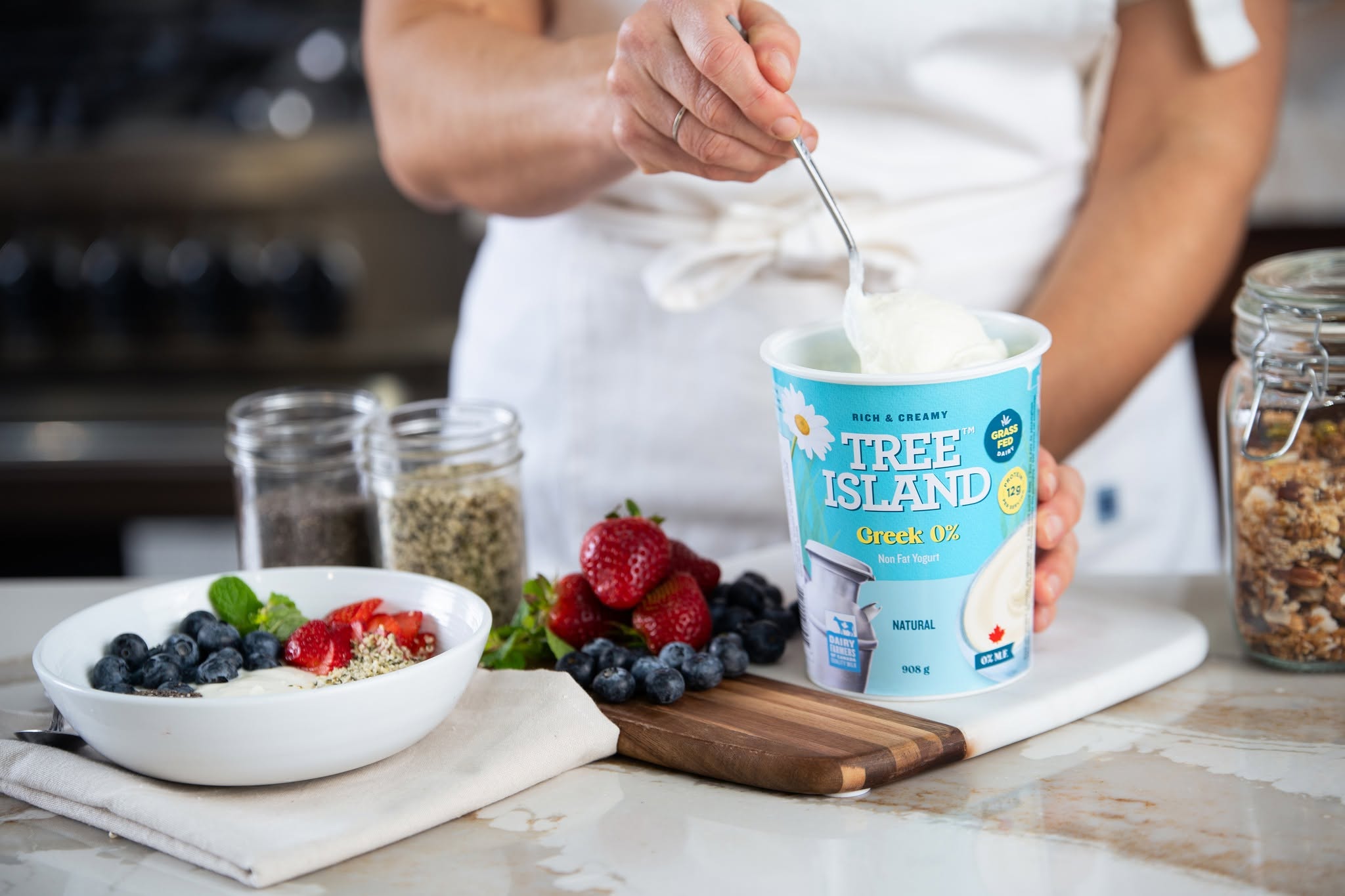
Greek yogurt is made by straining out a portion of the liquid whey, and whey carries lactose with it. The result is a thicker, higher-protein yogurt that is naturally lower in lactose than regular yogurt.
Our Natural and Vanilla Greek yogurts go through that straining process right here on Vancouver Island, made in small batches the same way we make everything else.
What to Look for on the Label
Not all mainstream yogurt keeps its live cultures by the time it reaches the shelf. Some products are heat-treated after fermentation, which kills the bacteria and removes the lactase-producing benefit, leaving you with something closer to a flavoured pudding than a fermented food.
If live cultures matter to you, look for the words “live active cultures” on the label, or check the ingredients list for specific strain names. That’s your confirmation that the cultures are still present and active.
You’ll find them in Tree Island Yogurts, always.
A Note on Individual Tolerance
Lactose intolerance exists on a spectrum. Some people may handle yogurt comfortably while still reacting to fresh milk or aged cheeses, while others may need to be more careful across the board. For anything beyond general guidance, especially if you’re managing a more significant dairy sensitivity, it’s worth checking in with a healthcare provider if desired.
What we can say with confidence is that fermentation is a genuinely meaningful step, and that we work hard to keep our live cultures intact so you get every benefit of every batch.
To find Tree Island Yogurt near you, visit our store locator.